Midweek Synapse #1
I keep a wiki of everything I read, and every Wednesday I pull one thread out of it and chase where it goes. This week the thread was a word I had never heard: geomythology.
The claim underneath it is a big one. Some of the world’s oldest stories might not be metaphors at all. They might be reports, from people who were there.
The reason that’s hard to test is obvious enough. A story has no date stamp. Anyone can look at a legend about a flood, find a flood in the geological record, and declare a match. That’s not evidence, that’s pattern matching after the fact. So the interesting question isn’t “does this myth sound like a real event”, it’s is there an independent clock? Something outside the story that says when.
Three cases have one.
Australia: the coastline that moved
Geographer Patrick Nunn and linguist Nicholas Reid catalogued 18 groups of Aboriginal Australian stories, from all around the continent’s coast, that describe the shoreline sitting much further out than it does now. Islands that were hills you could walk to. Bays that were dry hunting ground. The Yidindji describe Fitzroy Island as once joined to the mainland. The Narrangga describe dry country where Spencer Gulf is today.
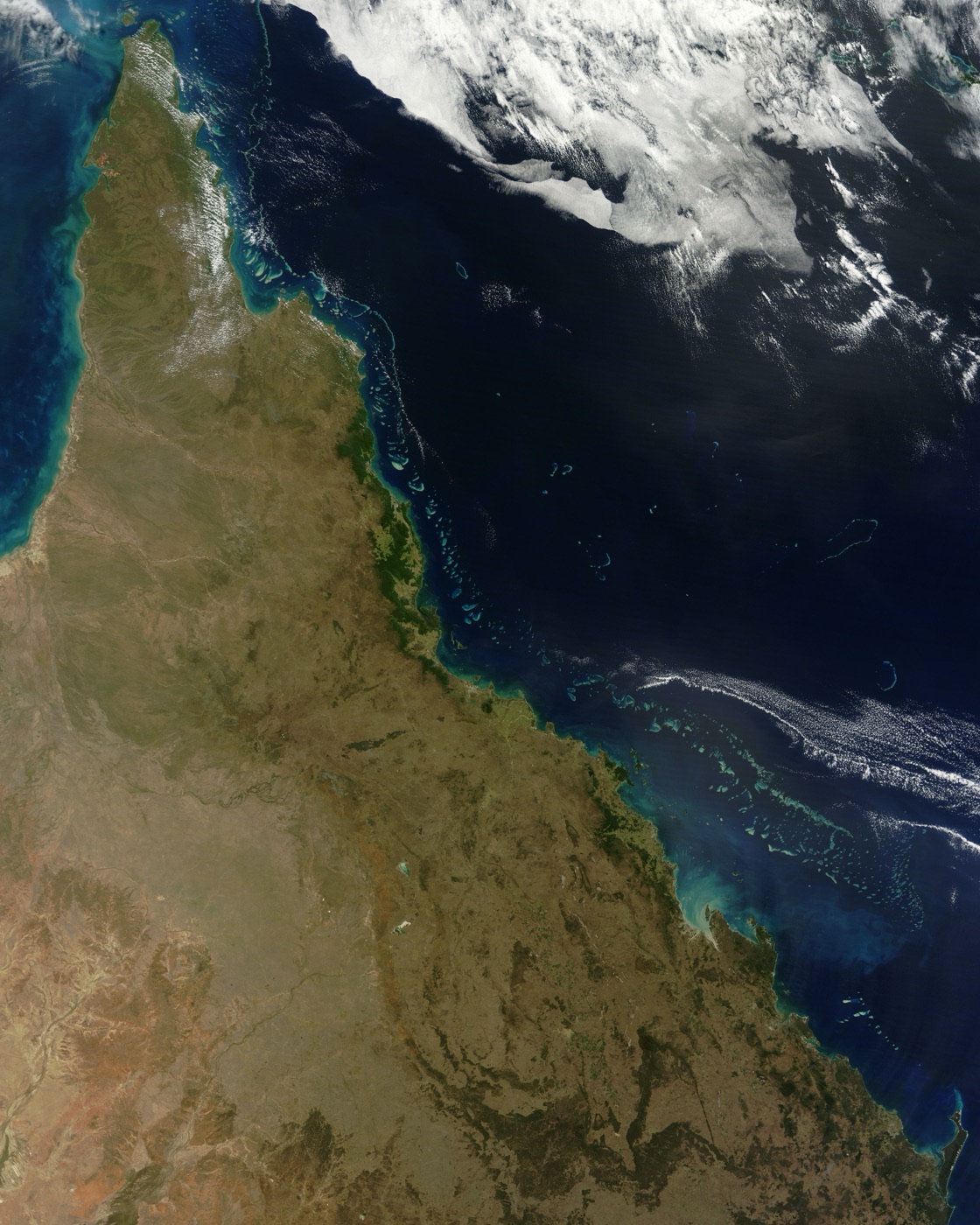
The drowned landscape the stories describe, from orbit. NASA (public domain).
Here’s the clock. After the last Ice Age, sea level rose roughly 120 metres and settled at about its present height around 7,000 years ago. That’s not from the stories, it’s from sediment cores and coral records. If these stories describe the coast before it drowned, they are at least 7,000 years old, and some may reach 13,000. That’s around 300 generations of telling.
Oregon: the mountain that fell
The Klamath tell of a battle between Llao, chief of the world below, and Skell, chief of the world above. It ends with the mountain collapsing in fire and filling with water.
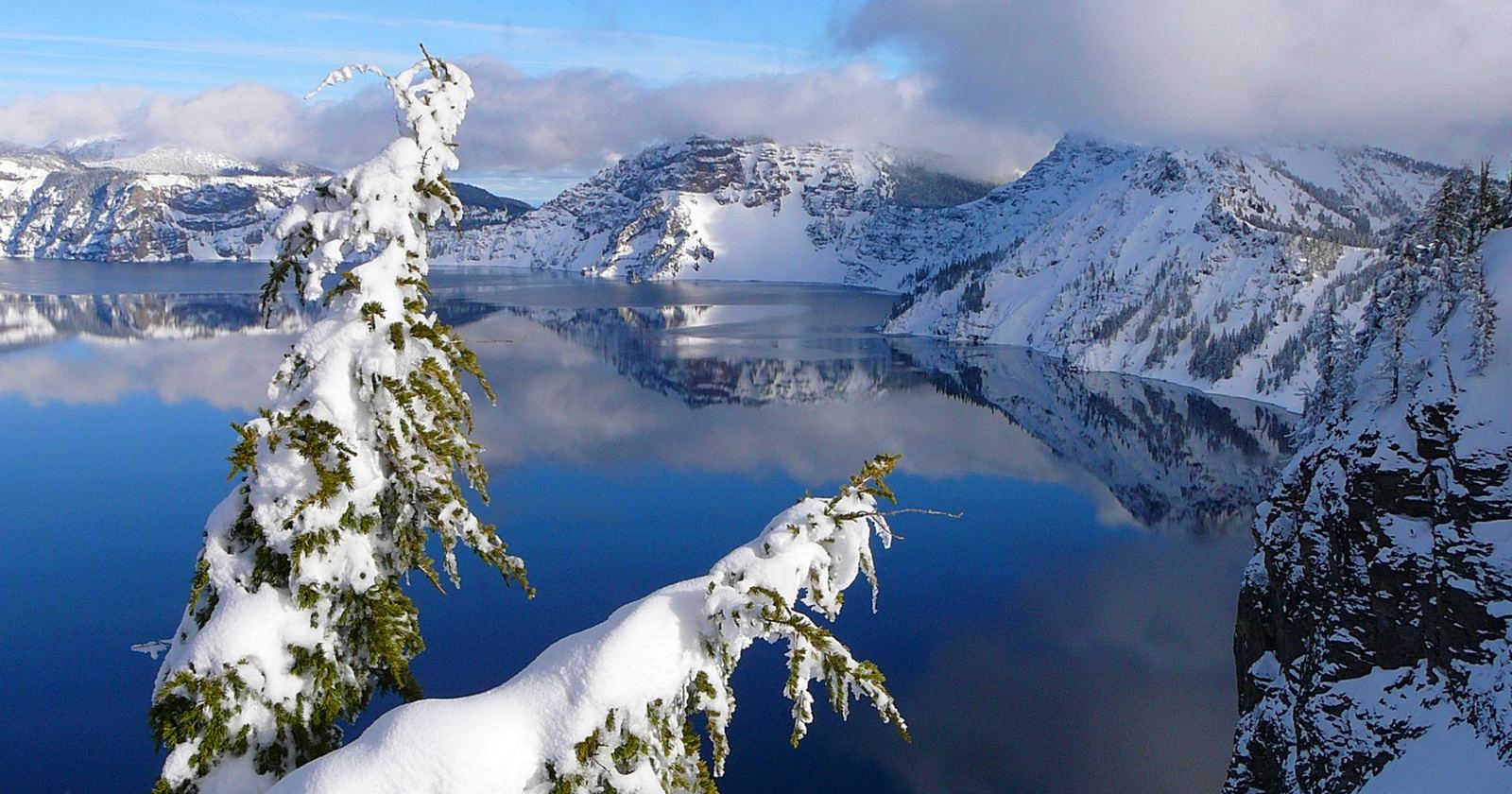
Mount Mazama erupted and collapsed about 7,700 years ago. The caldera it left is Crater Lake. Sandals and other artifacts have been found buried under the Mazama ash, so we know people were there to watch. The story tracks the physical sequence: eruption, collapse, water.
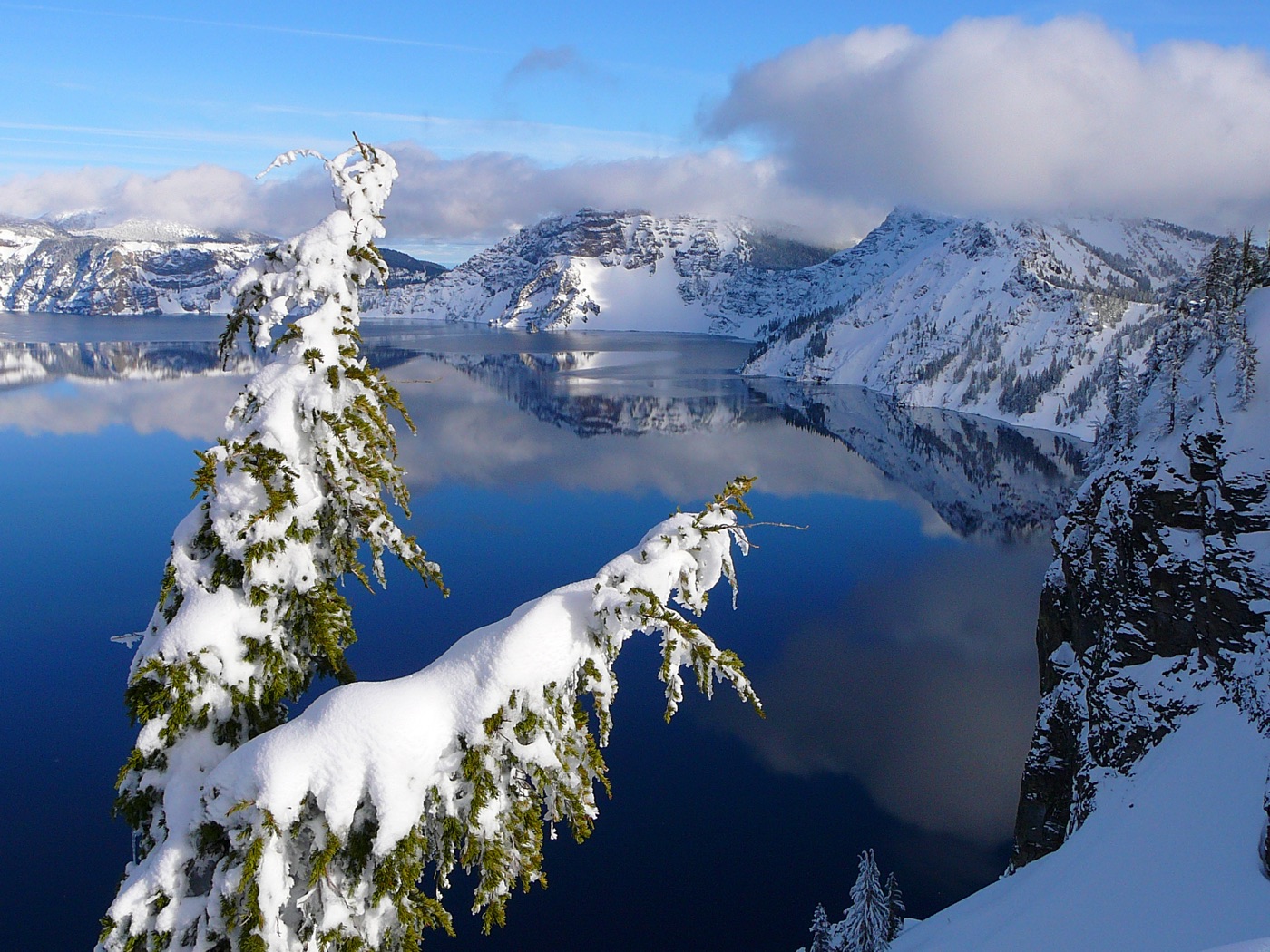
What the collapsed mountain looks like today. National Park Service (public domain).
The Pacific Northwest: the cleanest date in the field
This is the one that convinced me.
On a winter night in 1700, a magnitude 9 earthquake ruptured the Cascadia subduction zone off the coast of what is now Oregon and Washington. Nobody in the region wrote it down.
Three separate records caught it anyway:
- Japan. The tsunami crossed the Pacific and hit the Japanese coast on 27-28 January 1700. Village officials recorded a destructive wave with no earthquake felt before it, which is a strange enough thing to write down carefully. Japanese scholars called it an “orphan tsunami” long before anyone knew its parent.
- The trees. Along the Washington coast stand “ghost forests”, drowned red cedar killed when the land dropped and salt water came in. Their outermost growth ring is from 1699. They died between the 1699 and 1700 growing seasons.
- The stories. The Huu-ay-aht and neighbouring peoples tell of a winter night when the ground shook and the sea destroyed the villages, leaving few survivors.
A foreign document, a tree ring, and an oral tradition, none of which knew about the others, all pointing at the same night.
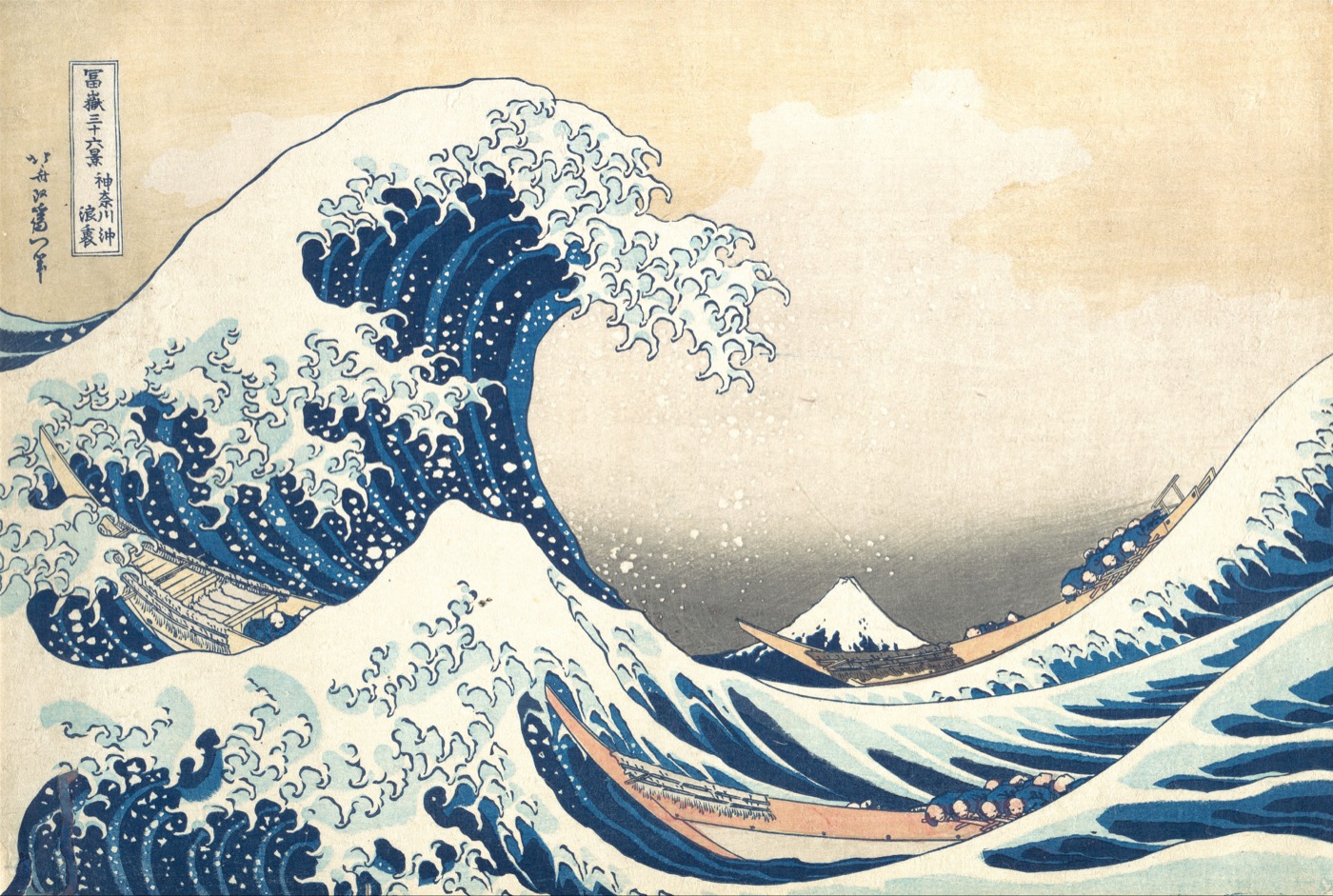
Japan knew tsunamis well enough to notice one with no earthquake attached. Hokusai, c. 1831 (public domain).
The mechanism, and the honest caveat
If these stories really are that old, why didn’t they drift into nonsense? Nunn and Reid argue it isn’t luck. Some Aboriginal cultures built rules around transmission: who is permitted to tell a story, and kin-based systems where specific relatives are responsible for correcting the teller. Redundancy and error-checking, engineered into how knowledge gets passed on.
Now the caveat, because it’s real. Archaeologist Neil Price puts the objection plainly: geomythology is prone to confirmation bias and hampered by imprecise dating. Stories drift. They telescope separate events into one. And it is very easy to reinterpret a legend once you already know what you’re looking for.
I think that critique lands, and it’s the reason the “independent clock” test matters so much. Cascadia is strong because its clocks are external and precise. Crater Lake is strong. A story with no independent date is just a story you like the sound of, and I’d rather hold that lightly.
What stays with me is the last part. These traditions worked because somebody designed them to work: rules about who speaks, systems for catching errors, redundancy across tellers. Durable knowledge wasn’t an accident. It was a design problem, and they solved it with no writing at all.
That’s a humbling thought for someone who keeps a wiki.
Sources
- The Australian coastal stories and the 7,000-year sea-level clock: Nunn & Reid, Australian Geographer (2016), summarised by the authors in The Conversation.
- The eruption that made Crater Lake, and its date: US National Park Service.
- The 1700 earthquake, the Japanese records, and the ghost forests: Atwater et al., The Orphan Tsunami of 1700, USGS Professional Paper 1707.
Part of #MidweekSynapse, my weekly quest to learn in public.
Every Wednesday I pull a thread from my second brain and chase a new idea, usually where two fields meet. It is my quest to understand a bit more, and wire up a new synapse. Read the rest of the series, or follow the 60-second versions at @vinavu_ai.